Cart
0
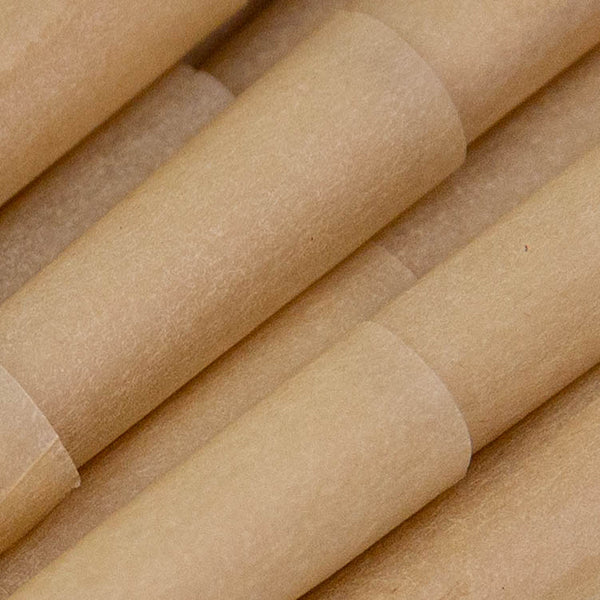
Walk the production floor of almost any licensed cannabis facility and you will find the same workhorse category: pre-rolls. Ready-to-smoke joints have grown from an afterthought at the register into a core revenue line for dispensaries and Licensed Producers alike — and nearly all of that volume is built on one unglamorous input: bulk pre-rolled cones.
This guide is written for the people who buy them. If you are a procurement manager, co-packer, or brand owner evaluating cone suppliers, it covers why the category keeps growing, the real cost math behind cones versus hand-rolling, standard sizes and fill weights, and what experienced buyers verify before signing a purchase order.
Why the Pre-Roll Category Keeps Growing
Pre-rolls solve a genuine consumer problem. Most customers either cannot roll well, do not want to, or simply value a consistent, finished product. As legal markets have matured across North America and beyond, retail sales data has consistently placed pre-rolls among the top-selling product formats alongside flower and vape.
Growth on the shelf drives growth upstream. Every infused mini, dogwalker multi-pack, and king-size single starts as an empty cone that a producer had to source, fill, weigh, and package. For brands, that makes cone procurement a recurring, volume-driven purchase — closer in character to packaging supply than to a one-off accessory buy. Producers that treat it that way, with qualified suppliers and negotiated tiered pricing, protect their margins as they scale.
Pre-Rolled Cones vs. Hand-Rolling: The Cost and Throughput Math
The case for pre-rolled cones comes down to labor, speed, and repeatability.
The labor math
Consider an illustrative example. An operator earning $18 per hour who hand-rolls 200 joints in an 8-hour shift generates $144 in labor cost — roughly $0.72 per unit before paper — with visible unit-to-unit variance in weight and density. That output ceiling is hard to move: hand-rolling is a skill, and skilled rollers are expensive to hire and retain.
Now put that same operator on a cone-filling machine loaded with pre-rolled cones. Widely used equipment such as the Futurola Knockbox, STM lines, and King Kone fills anywhere from about a hundred to several hundred cones per cycle, with each cycle taking only minutes. Daily output moves from hundreds of units to thousands, and per-unit labor drops to cents. Bulk cone pricing typically runs from roughly $0.05 per unit for stock refined-white paper at volume to about $0.88 for specialty formats — so even at the top of that range, the total cost per finished pre-roll usually lands well below the hand-rolled equivalent.
Consistency is the hidden savings
Throughput is only half the story. Regulators and retailers both expect labeled weights to be accurate, and consumers notice loose, canoeing, or inconsistently packed joints. Machine-filled cones produce uniform weight and density across a run, which means fewer rejected units, less rework, and less flower lost to overfilling. For an infused pre-roll line, where the flower input is more expensive, that consistency compounds quickly.
Standard Cone Sizes and Typical Fill Weights
Cone sizing is largely standardized across the industry, which is what makes machine automation possible. These are the four formats most B2B buyers order, with typical fill weights:
| Cone length | Common name | Typical fill weight | Typical use case |
|---|---|---|---|
| 70 mm | Dogwalker / mini | ~0.3 g | Multi-packs, infused minis, entry-price SKUs |
| 84 mm | 1-1/4 | ~0.5–0.75 g | The standard single pre-roll |
| 98 mm | 98 Special | ~0.75–1 g | Premium singles, higher-dose formats |
| 109 mm | King size | ~1–1.3 g | Full-size and infused pre-rolls |
Beyond standard pre-rolled cones, most suppliers also offer blunt cones for hemp-wrap SKUs and premium formats such as glass-tip and wooden-tip cones, which support higher retail price points. Matching cone format to your brand tier — and confirming the format runs on your filling equipment — is one of the first decisions in any pre-roll program.
What LP Procurement Teams Evaluate in a Cone Supplier
Experienced buyers rarely choose on price per cone alone. A cheap cone that jams your machines or fails incoming QC is the most expensive cone you can buy. Here is what disciplined procurement teams check.
Paper and materials
Ask what the paper is, where it comes from, and how it burns. Refined white, unbleached brown, and specialty papers each behave differently on the machine and in the hand. Responsibly sourced paper matters to many retail buyers as well — ConesWorld, for example, manufactures on FSC-certified paper.
Machine compatibility
Cones must load cleanly into your filling equipment. Confirm compatibility with the specific machines on your floor — Futurola, STM, and King Kone platforms are the most common — and request samples to run an actual test batch before committing to volume. Consistent cone geometry and tip construction are what keep jam rates and rejects low at scale.
Documentation and quality control
Because finished pre-rolls face regulatory testing, producers need suppliers who can support their compliance file. Look for a documented quality system — ConesWorld operates under GMP and ISO 9001:2015 — and confirm that COAs and MSDS documentation are available on request. Incoming inspection is easier when the supplier can tell you exactly what was shipped and how it was made.
MOQs, lead times, and unit economics
Understand the commercial terms before you build them into your production plan. As a reference point, ConesWorld's stock cones start at a 50,000-unit MOQ with 7–15 business day lead times, while custom-branded runs start at 100,000–250,000 units with 15–30 business day lead times. Brands developing their own SKUs — custom sizes, printed tips, branded pre-rolled tubes and packaging — should scope that through a dedicated white-label program rather than piecing it together from stock orders.
A Note on Regulation
One misconception worth correcting, because it appears in plenty of industry content: the FDA does not regulate pre-rolled cones. Empty cones are paper smoking accessories, not cannabis products. In the United States, oversight of finished pre-rolls sits with state cannabis regulators; in Canada, Licensed Producers answer to Health Canada under the Cannabis Act.
What this means practically for buyers: your compliance obligations attach to the finished, filled product. Your cone supplier's job is to give you clean inputs and the documentation — material specifications, COAs, MSDS — that lets you satisfy your own regulator and your own QA program. Any supplier claiming "FDA-approved cones" is telling you something about their diligence.
Sourcing Bulk Pre-Rolled Cones: Next Steps
The pre-roll category rewards operational discipline. Brands that standardize on proven cone formats, qualify their suppliers properly, and lock in volume pricing consistently produce better margins than those treating cones as an afterthought.
Work with ConesWorld
ConesWorld has manufactured more than 500 million cones across five facilities, supplying Licensed Producers, co-packers, and brands with stock and custom formats compatible with Futurola, STM, and King Kone equipment. Unit pricing runs $0.05–$0.88 per cone depending on format and volume, with COAs and MSDS available on request.
Start a B2B partnership inquiry for volume pricing and samples, or explore the Build Your Own Brand program for custom-branded cones. You can also reach our team directly at +1 (725) 277-0408 or business@conesworld.com.