Cart
0

Sustainability has moved from a marketing angle to a procurement requirement in cannabis. Licensed producers, distributors, and multi-state operators increasingly ask cone suppliers the same questions their retail buyers ask them: where does the paper come from, how is it processed, and can you prove it?
This guide covers what actually makes pre-rolled cones sustainable — fiber sourcing, bleaching processes, hemp paper, and packaging — and takes an honest look at what a “carbon neutral” claim requires before anyone prints it on a label. If your brand markets itself on environmental values, treat this as a due-diligence checklist for your next supplier conversation.
What Makes a Pre-Rolled Cone Sustainable?
A cone is a simple product — paper, a filter tip, and food-grade adhesive — but its environmental footprint is decided across four areas:
- Fiber sourcing: whether pulp comes from responsibly managed forests or agricultural fibers, with credible chain-of-custody documentation behind the claim.
- Processing: how the paper is pulped, and whether and how it is bleached.
- Packaging: how much material ships around each cone, and whether that material can be recycled.
- Logistics: consolidated bulk orders moved by ocean freight carry far lower emissions per unit than repeated small orders moved by air.
No single certification covers all four. Credible sourcing means asking specific questions, not accepting a leaf icon on a box.
FSC Paper Sourcing: Why Chain of Custody Matters
The Forest Stewardship Council (FSC) certifies that wood fiber comes from responsibly managed forests and — critically — tracks it through every stage of manufacturing via chain-of-custody certification. The distinction matters for buyers: “made from sustainable paper” is a marketing phrase, while FSC chain of custody is an auditable paper trail from forest to finished cone.
When you evaluate a supplier, ask for the certificate and its number, not just the logo. ConesWorld produces cones on FSC-certified paper, and documentation is available on request as part of standard B2B onboarding — handled the same way as COAs and MSDS sheets.
Unrefined Brown vs. Refined White Paper
Refined white rolling paper is bleached to achieve its clean, uniform appearance. Historically, bleaching with elemental chlorine created dioxin pollution in mill wastewater. Modern mills have largely moved to elemental chlorine-free (ECF) or totally chlorine-free (TCF) processes, which sharply reduced that problem — so refined white paper is not automatically an environmental failing. But the bleaching stage still adds chemistry, water, and energy to production.
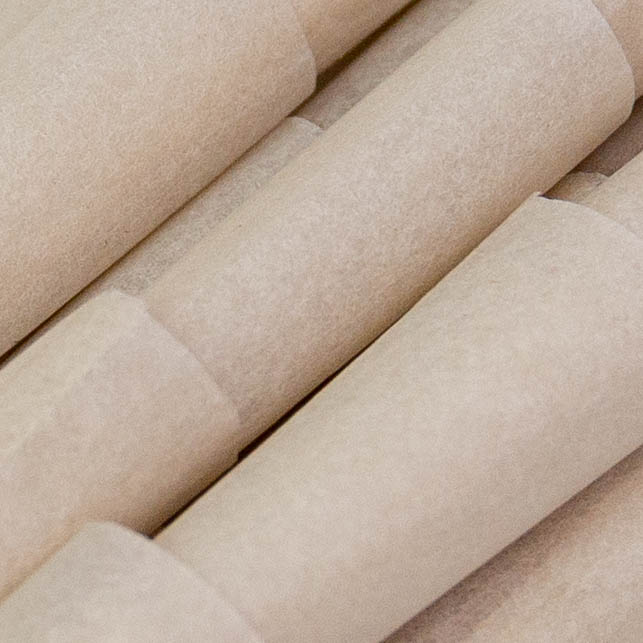
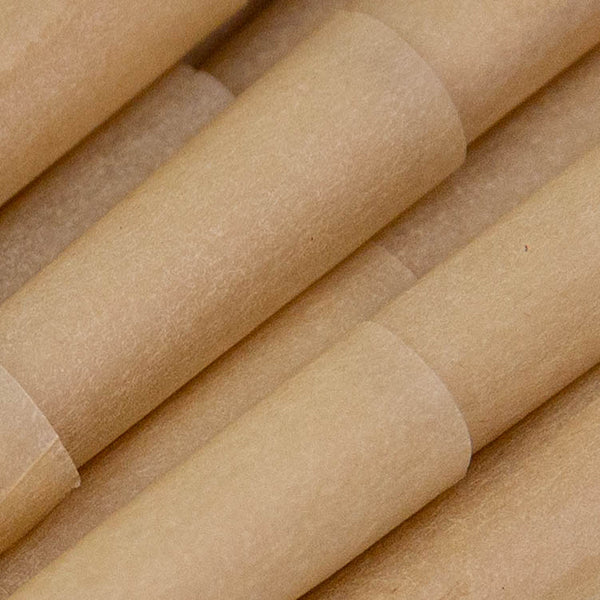
Unrefined (unbleached) brown paper skips that stage entirely. Fewer processing steps, no bleaching chemistry, and a natural tan appearance that many consumers now read as a quality signal rather than a compromise. For most brands, switching to unrefined paper is the simplest genuine sustainability upgrade available: it runs on the same filling equipment at the same fill weights, and well-made unrefined paper burns evenly and cleanly.
ConesWorld manufactures both unrefined brown and refined white cones across all standard sizes, along with specialty formats like blunt cones, so brands can position each SKU deliberately rather than by default.
Hemp Paper: Promising, But Not Automatically Greener
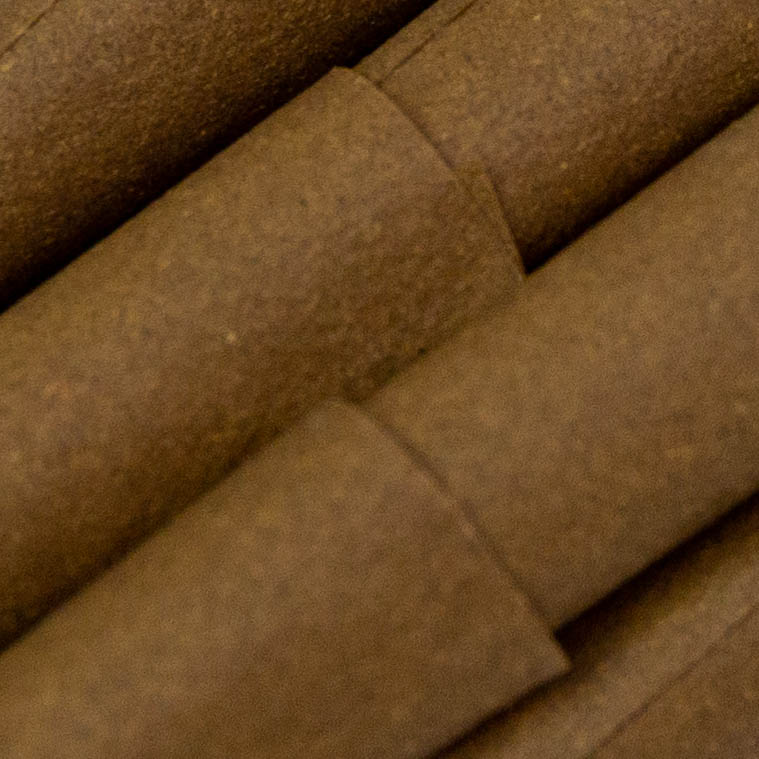
Hemp has earned its reputation as a strong fiber crop. It matures in a single growing season, produces high fiber yields per acre, and generally requires fewer pesticides than many conventional crops. On the agricultural side, the case is real.
The honest caveat is processing. Global paper infrastructure is built around wood pulp, and hemp pulping happens at much smaller scale — which means the finished paper’s footprint depends heavily on how and where it was processed and shipped. A hemp cone made with clean processing and sensible logistics can genuinely outperform wood pulp; a poorly made one may not. The word “hemp” on the label doesn’t settle the question by itself.
Our advice: choose organic hemp paper because your customers value its flavor, burn character, and story — then hold it to the same documentation standard you would apply to any other paper, rather than assuming the footprint takes care of itself.
Right-Sizing Cuts Waste More Than Any Label
The least-discussed sustainability lever in pre-rolls is size selection. An oversized cone wastes paper on every unit and — far more significant by both cost and footprint — either wastes flower to fill or ships underpacked pre-rolls that disappoint customers. Matching cone size to your target fill weight reduces waste at the source.
| Format | Length | Typical fill weight | Common use |
|---|---|---|---|
| Dogwalker | 70 mm | ~0.3 g | Multi-packs, low-dose SKUs |
| 1-1/4 | 84 mm | 0.5–0.75 g | Standard single pre-rolls |
| 98 Special | 98 mm | 0.75–1 g | Premium singles |
| King Size | 109 mm | 1–1.3 g | Full-gram-plus flagship pre-rolls |
All standard sizes are available in machine-ready formats compatible with Futurola, STM, and King Kone filling systems, so right-sizing a SKU doesn’t mean retooling a production line.
Packaging: The Easiest Wins
Packaging is usually where a pre-roll’s footprint balloons — and where the fastest reductions live:
- Bulk-packed production cones. Cones shipped in production trays rather than retail-style cartons eliminate an entire layer of material before the product reaches your line.
- Simpler retail tubes. Single-material tubes are easier to recycle than mixed-material formats. Compare options in our pre-rolled tubes collection.
- Durable and natural tips. Glass-tip cones and tubes add a durable, inert mouthpiece consumers can keep using, while wooden-tip cones replace extra paper or plastic with a natural material.
- Right-sized master cases. Denser case packing lowers dimensional weight, which cuts freight cost and freight emissions in the same move.
What a “Carbon Neutral” Claim Actually Requires
Here is where this article’s original version — like much of the industry’s marketing — needed correction. Carbon neutrality is not achieved by planting some trees and printing a badge. A defensible claim requires:
- Measurement. A greenhouse-gas inventory covering your own operations and purchased energy (Scopes 1 and 2) and, for a credible product-level claim, the supply chain (Scope 3) — typically following the GHG Protocol.
- Reduction first. Recognized frameworks such as ISO 14068 and PAS 2060 expect documented emissions reductions before offsetting, not instead of it.
- Quality offsets for the remainder. Credits should come from established registries such as Verra or Gold Standard, be retired in your name, and be additional — funding reductions that would not have happened anyway.
- Substantiation on file. In the US, the FTC’s Green Guides require environmental marketing claims to be substantiated and appropriately qualified. In the EU, consumer-protection rules adopted in 2024 will prohibit generic claims like “climate neutral” that rest solely on offsetting, with enforcement phasing in from 2026.
The practical takeaway: if you cannot produce the inventory, the reduction record, and the offset retirement certificates, don’t print the claim. Specific, verifiable statements — “FSC-certified paper,” “unrefined,” “recyclable tube” — build more consumer trust than a vague neutrality badge, and they don’t create regulatory exposure.
How ConesWorld Approaches This
As a manufacturer, our claims stay inside what we can document. ConesWorld cones are produced on FSC-certified paper in facilities operating under GMP practices with an ISO 9001:2015-certified quality management system. We do not market our cones as carbon neutral, because we have not completed the third-party verification that claim requires — and we would rather say that plainly than sell you a label you would then have to defend.
What we can offer today: unrefined brown, refined white, and organic hemp paper options; certification documentation, COAs, and MSDS sheets on request; consolidated bulk shipments that lower per-unit freight; and white-label programs that apply all of the above to your own brand through our Build Your Own Brand program.
Source Sustainable Pre-Rolled Cones at Scale
ConesWorld has manufactured more than 500 million cones across five facilities, supplying licensed producers and distributors worldwide. Stock orders start at 50,000 cones with 7–15 business day lead times; custom and white-label runs start at 100,000–250,000 cones with 15–30 business day lead times. Every format is compatible with Futurola, STM, and King Kone equipment, and sustainability documentation is available on request.
Start a B2B partnership · Email business@conesworld.com · Call +1 (725) 277-0408